In the world of corporate filings, publication is a bit of a holdover. Only a small number of states still require this step, and it is usually only done for certain entity or filing types. For example, New York and Pennsylvania require publication of certain formation and foreign registration documents. In other states, such as California, Florida, and Georgia, fictitious/assumed/trade name filings must be published.
Differing from the examples above, Nevada has an annual publication requirement for foreign corporations conducting business in the state. The statute indicates that these entities must publish certain corporate information in two issues of a Nevada newspaper by March 31 of each year. As a result, newspapers will often send out their solicitations for publication during the first few months of the year.
It may be unclear under which circumstances publication is required and that is where we come in! Our knowledgeable and experienced Client Service Representatives are equipped to handle both the filings and any necessary publications.
Several States make Changes
Texas
2019 proved to be a busy year for legislatures across the nation. The Texas Business and Commerce Code was amended to eliminate the duplicative assumed name certificates for business entities required to register with the Secretary of State. Effective September 1, 2019, corporations, limited liability companies, limited partnerships, limited liability partnerships, and foreign filing entities are no longer required to file an assumed name certificate at the county level. Businesses not requiring registration with the Secretary of State, such as general partnerships, real estate investment trusts, and joint ventures, are still required to file an assumed name certificate at the county level.
North Dakota
North Dakota joined the masses and changed the way it determines whether a business entity name is available. Effective April 26, 2019, North Dakota’s name availability standard changed from the “deceptively similar” standard to a less restrictive “distinguishable in the records” standard. This change should result in a wider range of names available for new domestic entities and a greater chance of legal name registration for foreign entities.
Florida and Montana
Both Florida and Montana recently passed comprehensive revisions to their corporate laws. The modified and new provisions regarding corporate governance, largely based on the 2016 Model Business Corporation Act, bring uniformity, making it easier for corporations to operate in those states. Florida’s new legislation took effect January 1, 2020, while Montana’s goes into effect June 1, 2020.
Maine and Oklahoma
Lastly, the benefit corporation movement continues to sweep the nation. Maine and Oklahoma both passed legislation allowing companies to register as benefit corporations. This corporate designation gives greater legal protection for companies pursuing for profit business models while maintaining a primary objective to generate a public benefit. Nearly all states now recognize some type of public benefit business entity.
The ARMS Advantage
There was a time when you could rely on states to send reminders to file your companies’ annual reports and to keep you abreast of any changes to their due date requirements. No longer! Many states have stopped sending reminders of annual report due dates, and companies are forced to identify and track the due dates themselves. Perhaps this is why so many companies miss their annual report filings and fall out of good standing each year.
The consequences of failing to file your annual reports can be significant.
These include:
• Administrative dissolution or revocation
• Loss of right to use your corporate name
• Tax liens against you for unpaid taxes
• Voidable contracts if entered into while in bad standing
• Breach or default of duties under financing agreements
Tired of attempting to keep track of your annual report due dates? Sign up for our Annual Report Management Service (ARMS), and let us manage your filings! ARMS is an auxiliary service offered to companies that have appointed us as their registered agent. We can help take the pain out of annual report compliance.
As of today, almost all U.S. states have passed statutes allowing for electronic or e-recording of real estate documents. We are happy to now offer an e-recording service in thousands of counties across the country.
In most cases, e-recording reduces fees and turnaround time for evidence of filing. Because we are able to get an almost immediate satisfaction of filing or rejection, there is no longer a concern that a filing office or delivery service will misplace an important document without us knowing. Postage alone on large recording projects can add significant costs – especially if those large boxes are shipped to your service provider, a local filing office, and then back to your desk.
As we’ve seen with some Secretary of State requirements, it’s not impossible to imagine a day when real estate documents are required to be electronically transmitted. Take advantage of our e-recording service and ask us if your next filing is eligible!
Legalization is a term used in international law to describe the process of authenticating or certifying a document so that it will be recognized as valid in a foreign country. Legalization creates a chain of authentications, each by a progressively higher government authority, from the country where the document was issued to the embassy or consular office of the country in which the document is to be used. It may sound simple enough, but in practice, legalization can be a complicated sequential process of multiple verifications that can vary by country and government office.
Not all countries, however, require legalization of documents. The Hague Convention is an international treaty, now with over 115 member countries, that specifies the manner through which a document issued in one member country can be certified for legal purposes in each of the other member countries. Certification under the terms of the Hague Convention is called an apostille and is sufficient for acceptance in place of any further legalization processes. The catch, however, is that both countries must be members of the Hague Convention for an apostille to be sufficient.
Whether you need an apostille or legalization, Capitol Services has a dedicated apostille and legalization team with experience working with embassies, consulates, and designated competent authorities. Contact us to help make what can be a timely and complicated process as quick and seamless as possible.
People love series. They love to watch the World Series, read the Harry Potter series, and binge on the Friends television series. Now there is a new series in town. Get ready for the Delaware registered series!
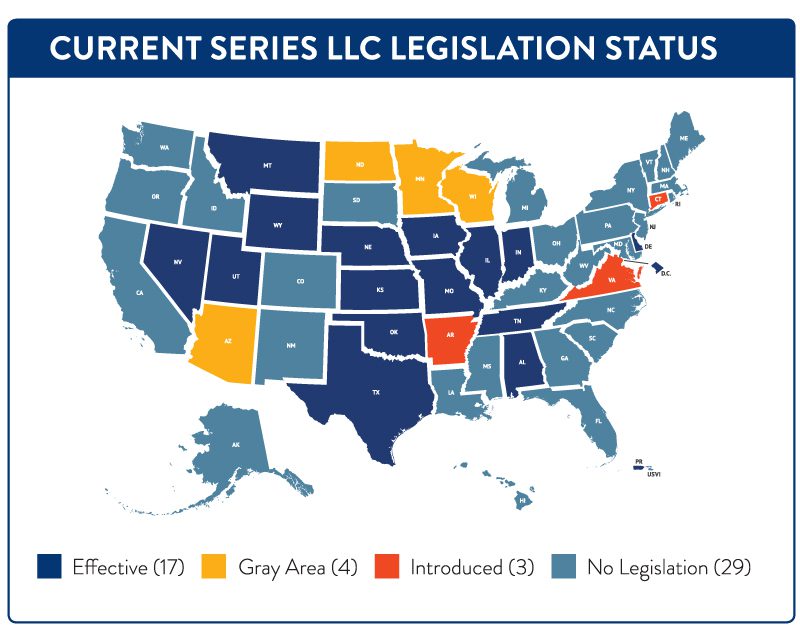
In 1996, Delaware allowed for the creation of a series LLC, a unique form of limited liability company in which the articles of formation specifically allow for unlimited segregation of membership interests, assets, and operations into independent series. Other states soon followed by passing their own series LLC legislation. To date, seventeen states have enacted series LLC legislation, four additional states acknowledge series LLCs but do not offer the liability shield, and at least three states have introduced series LLC legislation for consideration this year. In 2017, the Uniform Law Commission approved the Uniform Protected Series Act in an attempt to provide consistency across the states, and most recently, the Delaware Limited Liability Company Act was amended to address certain limitations in connection with their existing series LLC statute.
Effective August 1, 2019, Delaware allows for formation of a registered series LLC by filing a certificate of registered series in the office of the Secretary of State. This new legislation allows for the merger and consolidation of registered series, issuance of certificate of good standing for registered series, and the conversion of a protected series into a registered series. There will be an annual tax of $75 per registered series, and the statute allows for the administrative cancellation of a registered series after three years of delinquency. So why are series LLCs gaining so much attention? Shockingly, not for the same reasons that people love watching a home run that turns around Game 4, reading another lengthy tale of wizardry, or revisiting the scene where Monica has a turkey on her head.
Series LLCs offer a method of liability segregation without the cost and upkeep of forming multiple LLCs. Instead, they permit a single LLC to be formed with the designation that it will allow for series to be created within the limited liability company agreement. Thereafter, each individual series will operate like a separate entity with a unique name, bank account, and separate books and records. Each series within the LLC may enter into contracts, sue or be sued, and hold title to real and personal property, and the assets owned by each series are shielded from the risk of liability of the other series within the same series LLC.
Series LLCs may not be as exciting as the World Series, or as entertaining as Harry Potter and Friends, but they are gaining in popularity and are expected to continue to increase in number.
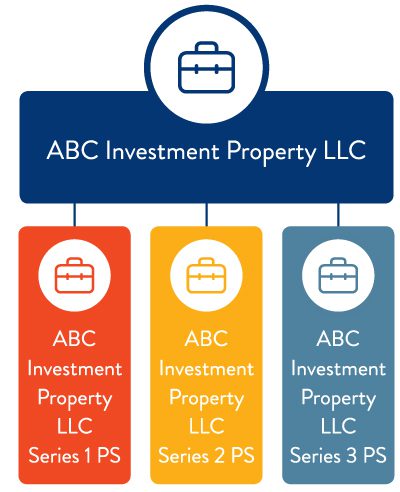 Series LLCs offer a method of liability segregation without the cost and upkeep of forming multiple LLCs. Instead, they permit a single LLC to be formed with the designation that it will allow for series to be created within the limited liability company agreement. Thereafter, each individual series will operate like a separate entity with a unique name, bank account, and separate books and records. Each series within the LLC may enter into contracts, sue or be sued, and hold title to real and personal property, and the assets owned by each series are shielded from the risk of liability of the other series within the same series LLC.